



How We Treat Herniated Discs with Spinal Decompression and Integrated Therapies
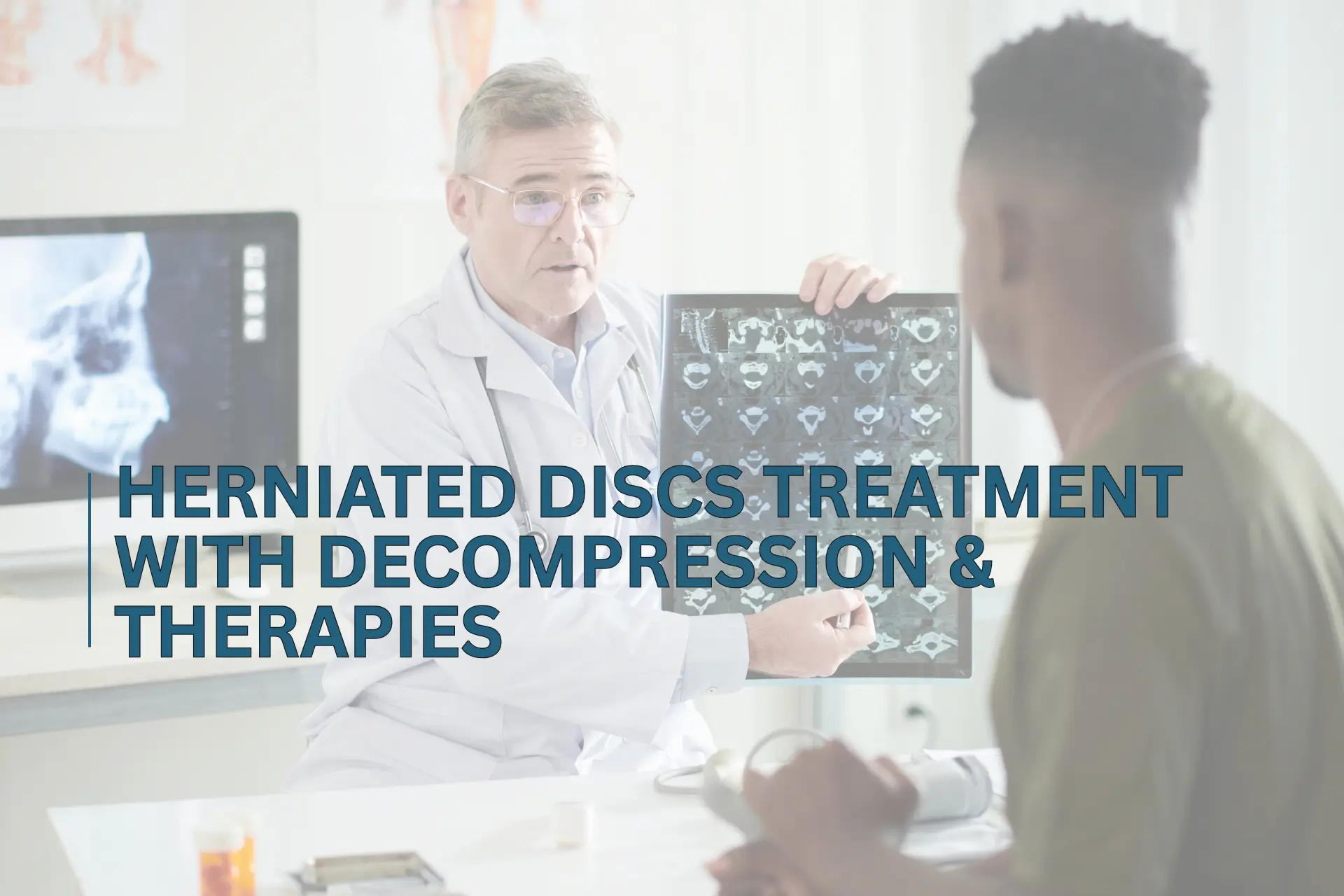
A herniated disc occurs when the nucleus pulposus pushes through a tear in the annulus fibrosus, pressing against nearby spinal nerves. This condition is also known as a slipped, bulging, or ruptured disc. Each spinal disc acts as a cushion between vertebrae in your spinal column. When compromised, it can disrupt the spine’s stability and function.
Key Definitions
Causes and Progression Stages
Common causes include:
- Aging → Leads to disc dehydration and loss of flexibility.
- Heavy lifting → Can cause acute disc rupture.
- Trauma → Sudden impact may tear the annulus.
- Genetics → Some inherit weak disc structures.
The stages:
- Disc Degeneration
- Prolapse (bulging)
- Extrusion (herniation)
- Sequestration (disc fragments migrate)
Signs and Symptoms of Herniated Discs
The degree of nerve involvement and the disc's location affect the symptoms.
By Spinal Region
Nerve root compression triggers radiculopathy, which includes:
- Sharp shooting pain
- Numbness or tingling
- Muscle weakness
- Mobility limitations
Common Causes and Risk Factors
Herniated discs often result from a mix of lifestyle habits and physical degeneration.
Notable Risk Factors:
- Age-related wear → Common after age 30.
- Sedentary lifestyle → Weakens core stability.
- Poor posture → Increases spinal load.
- Repetitive stress → Found in labor-intensive jobs.
- Obesity → Adds pressure on lower spinal discs.
Additional contributors:
- Smoking (decreases disc hydration)
- High-impact sports (e.g., football, gymnastics)
- Genetic predisposition (family history of disc disease)
Diagnostic Methods for Herniated Discs
Accurate diagnosis requires both clinical examination and imaging.
Common Techniques
These methods help visualize spinal disc damage and determine the exact source of symptoms.
Why Conservative Care is the First Step?
Nonsurgical therapy is usually the primary option for herniated discs.
Initial Strategies
- Activity Modification → Avoid movements that worsen pain.
- NSAIDs → Reduce inflammation and ease discomfort.
- Physical Therapy → Builds support muscles and corrects posture.
- Home Exercises → Improve flexibility and alignment.
- Ergonomic Adjustments → Fix workstation posture issues.
Conservative care allows time for natural disc healing—many patients recover within 6 to 12 weeks without invasive procedures.
Spinal Decompression Therapy for Herniated Discs
Spinal decompression reduces pressure on spinal discs through controlled mechanical traction.
What It Involves?
- Spinal Decompression Machines → Use motorized tables to gently separate vertebrae.
- Negative Intradiscal Pressure → Promotes retraction of herniated disc material.
- Rehydration → Promotes the restoration of fluids that are high in nutrients to the disc.
Treatment Plan
- Session Duration: 20–45 minutes
- Frequency: 2–4 times weekly
- Total Duration: 4–8 weeks
This therapy is non-invasive, pain-free, and shown to significantly reduce nerve compression symptoms.
Chiropractic and Physical Therapy Approaches
Chiropractic care and physical therapy help restore mobility, strength, and alignment.
Chiropractic Techniques
- Spinal Manipulation → Improves vertebral mobility.
- Manual Adjustments → Target misalignments that stress discs.
Physical Therapy Approaches
- Stabilization Exercises → Strengthen lumbar core.
- Manual Therapy → Breaks down scar tissue and reduces muscle tension.
- Posture Training → Teaches ergonomic alignment habits.
A coordinated rehab program also prevents future disc injury by improving spinal mechanics and resilience.
Integrative Therapies for Comprehensive Healing
The recovery process is enhanced by adjunct therapies when combined with physical therapy and decompression.
Complementary Therapies
- Massage Therapy → Relieves muscle tightness and improves circulation.
- Acupuncture → Reduces pain by stimulating nerve pathways.
- (LLLT) Low Level Laser → Promotes collagen synthesis and cellular healing.
- Nutritional Therapy → Includes anti-inflammatory diets and supplements.
Such therapies aim to accelerate tissue healing, reduce inflammation, and boost the body's natural regenerative processes.
Surgical Options: When Is Surgery Necessary?
When conservative treatment is ineffective after 6–12 weeks or when neurological impairments get worse, surgery may be considered.
Indications for Surgery
- Progressive muscle weakness
- Loss of bladder/bowel control
- Severe pain unresponsive to therapies
Common Procedures
Recovery includes physical therapy, temporary activity restrictions, and post-surgical imaging. The majority of patients resume their jobs after 4–12 weeks.
Recovery and Long-Term Management
Recovery varies based on the disc’s severity, age, and treatment plan.
Healing Timeline
- Acute Phase: Pain management and rest (1–4 weeks)
- Subacute Phase: Rehab and therapy (4–12 weeks)
- Maintenance Phase: Strengthening and injury prevention (ongoing)
Maintenance Strategies
- Regular Exercise → Keep back muscles strong.
- Postural Awareness → Avoid slouching or asymmetry.
- Pain Journal → Track flare-ups and progress.
- Scheduled Checkups → Monitor disc condition and spinal function.
Sustainable recovery requires consistent movement, therapy compliance, and ergonomic mindfulness.
Preventing Herniated Discs in the Future
Prevention focuses on strengthening the spine and minimizing stress through ergonomics and movement habits.
Key Preventive Actions
- Core Strengthening → Spinal support is enhanced by Pilates, planks, and bridges.
- Proper Lifting Techniques
- Bend knees
- Keep object close
- Avoid twisting
- Workplace Ergonomics
- Use lumbar support
- Alternate between sitting and standing
- Adjust monitor to eye level
Preventive care lowers recurrence risk and protects against future disc degeneration.
FAQs About Herniated Discs
How long does herniated disc pain last?
Most cases improve in 6–12 weeks with therapy.
What’s the best sleeping position?
On your back with knees elevated or on the side with a pillow between knees.
Can I exercise with a herniated disc?
Yes, under guidance. Limit your range of motion and avoid high-impact activities.
Is a back brace helpful?
Short-term use can provide support but should not replace core strengthening.
Will insurance cover decompression or therapy?
Many plans cover non-surgical treatments, but pre-authorization may be required.
Struggling with Back Chronic Pain in South Florida?
Discover how Spinal Decompression Therapy can offer lasting relief from disc-related back and neck pain—completely drug-free and non-invasive.
What to Expect During a SpineMED Session?
You’ll lie fully clothed on the SpineMED table
A comfortable harness is secured around the area being treated
The table applies slow, gentle cycles of decompression and relaxation
- Most patients describe the experience as relaxing and pain-free
Each session typically lasts 30–45 minutes, and many patients rest comfortably during treatment.
Conditions Commonly Treated With SpineMED
SpineMED spinal decompression may help patients experiencing:
- Herniated or bulging discs
- Degenerative disc disease
- Sciatica or nerve pain
- Chronic neck or lower back pain
- Facet syndrome
- Post-surgical back pain (in appropriate cases)
A Non-Surgical Approach to Spine Relief
SpineMED offers a non-invasive alternative for patients seeking relief without surgery or long-term medication use. Treatment plans are personalized and often combined with other therapies to support lasting results
Struggling with Back Chronic Pain in South Florida?
Discover how Spinal Decompression Therapy can offer lasting relief from disc-related back and neck pain—completely drug-free and non-invasive.
We Offer:
🔹Advanced Spinal Decompression Therapy — A proven, FDA-cleared solution to relieve pressure from herniated discs, sciatica, bulging discs, and degenerative disc disease. Backed by clinical studies with long-term success in reducing pain and restoring function.
🔹Tailored Treatment Plans — Every session is customized to your condition, guided by experienced spinal care professionals committed to measurable improvement.
🔹Compassionate, Supportive Team — At every stage of your journey, we put your comfort and recuperation first.
🔹Expert Leadership — Our care is led by renowned specialists in non-surgical spinal care and rehabilitation.
Learn More:
📘 What Is Spinal Decompression Therapy? A Beginner’s Guide for Patients
📘 Conditions That May Benefit From Spinal Decompression Therapy
📘 Spinal Decompression vs. Surgery: Understanding Your Non-Invasive Options
📘 What to Expect During a Spinal Decompression Session
📘 Is Spinal Decompression Therapy Safe? Risks, Benefits, and Who Should Avoid It
📘 How Spinal Decompression Supports Disc Health and Spinal Alignment
📘 Combining Spinal Decompression With Chiropractic Care, Physical Therapy, or Rehab
Visit Us:
📍 Conveniently located at 100 NW 100th Ave, Plantation, serving Palm Beach, Fort Lauderdale, and Miami.
💬 Over 1,000+ sessions successfully completed with a patient-first philosophy.
🏥 Trusted by chiropractic and pain management professionals throughout South Florida.
Take the First Step Toward a Pain-Free Life
Contact Spinal Decompression Therapy Institute today or call us at +1 954-472-7975.
No medications. No surgery. Just results.
👉 Follow us for patient stories, expert advice, and daily updates:
.png)
.png)
.png)
.png)
.webp)
.webp)
.webp)