




Spinal Decompression Therapy for Sciatica: How It May Help Relieve Nerve Pain
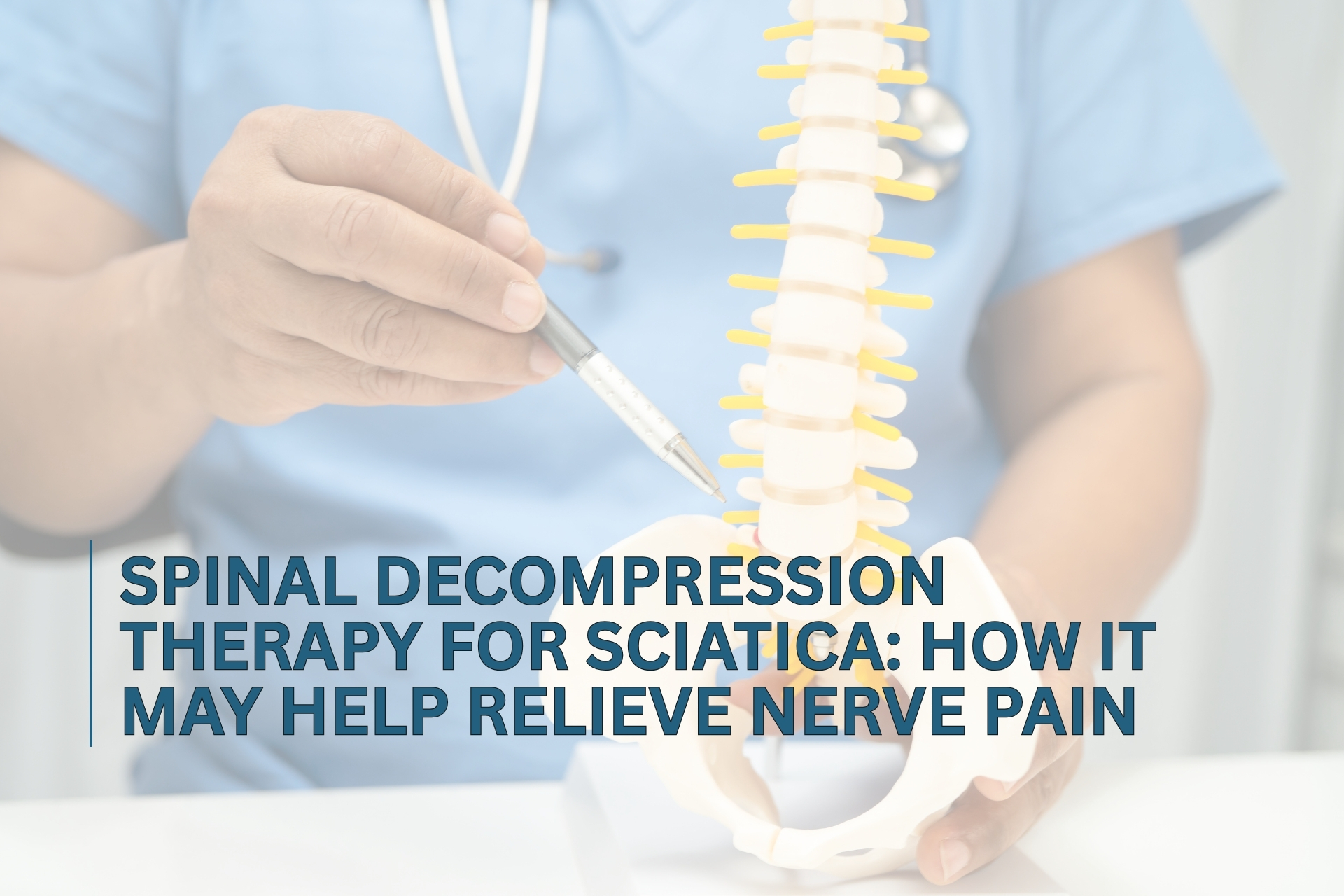
Sciatica pain starts when the sciatic nerve becomes irritated or compressed in the lower spine. Spinal decompression therapy for sciatica targets that compression directly. This article explains what the therapy is, how it works, who it helps, and what you can expect from treatment using clear medical context and current clinical insights.
What Is Spinal Decompression Therapy for Sciatica
Spinal decompression therapy for sciatica is a non-surgical treatment that reduces pressure on spinal discs and nerves. It uses controlled mechanical traction or manual techniques to gently stretch the spine. This process changes spinal positioning and lowers disc pressure near the sciatic nerve.
Overview of spinal decompression for sciatica pain
Sciatica pain follows the sciatic nerve pathway. The nerve roots exit the lumbar spine between vertebrae. When disc material, bone, or inflamed tissue presses on these roots, pain travels through the buttock, thigh, and leg.
Spinal decompression therapy focuses on:
- Creating negative pressure inside spinal discs
- Increasing space between vertebrae
- Reducing mechanical nerve root compression
Non-surgical spinal decompression often uses a motorized table. The table applies programmed traction cycles based on patient weight, condition, and spinal level.
Causes of sciatica addressed by spinal decompression
Spinal decompression therapy addresses structural causes of sciatic nerve compression, including:
- Disc bulges that narrow nerve exit spaces
- Herniated discs that leak nucleus material
- Disc height loss that reduces foraminal space
- Joint inflammation linked to spinal instability
These causes change spinal biomechanics. Decompression therapy targets those mechanical changes rather than masking pain.
Nerve compression and spinal decompression therapy
Nerve compression causes ischemia, inflammation, and altered nerve signaling. Spinal decompression therapy reduces compression forces. Lower pressure improves nutrient diffusion and fluid movement around the nerve root. Research published in The Journal of Physical Therapy Science shows spinal traction can reduce intradiscal pressure under controlled conditions.
Next, you will learn how decompression affects nerve pain pathways.
How Spinal Decompression Helps Relieve Sciatic Nerve Pain
Spinal decompression for nerve pain works by restoring spinal spacing, improving circulation, and reducing inflammatory stress on nerves. Each mechanism supports sciatic nerve recovery.
Disc pressure reduction with spinal decompression
Disc pressure increases when spinal segments compress. High pressure pushes disc material outward. Decompression therapy creates a vacuum effect inside the disc.
This effect:
- Draws bulging disc material inward
- Reduces mechanical pressure on nerve roots
- Improves disc hydration through fluid exchange
MRI-based studies show traction-based decompression can reduce disc protrusion size in selected patients.
Improved circulation during spinal decompression
Compressed tissues restrict blood flow. Nerves depend on oxygen and nutrients. Decompression increases space around blood vessels near the spine.
Improved circulation supports:
- Oxygen delivery to nerve tissue
- Removal of metabolic waste
- Faster tissue recovery
A study in Spine Journal reported improved microcirculation after decompression-based traction protocols.
Inflammation relief through spinal decompression
Inflammation amplifies nerve pain signals. Decompression reduces mechanical stress that triggers inflammatory cytokines.
Lower inflammation results in:
- Reduced nerve sensitivity
- Decreased pain intensity
- Improved movement tolerance
This leads directly into conditions commonly treated with decompression therapy.
Conditions Causing Sciatica Treated With Spinal Decompression
Spinal decompression sciatica conditions include disc and spinal canal disorders that compress nerve roots. The therapy targets the mechanical source of pain.
Herniated discs and spinal decompression
A herniated disc occurs when the nucleus pulposus pushes through the annulus fibrosus. This material can press against the sciatic nerve roots at L4, L5, or S1.
Spinal decompression helps by:
- Reducing disc protrusion pressure
- Allowing disc material retraction
- Improving disc nutrient exchange
Clinical reviews show patients with contained disc herniations respond best to non-surgical decompression.
Degenerative disc disease and spinal decompression
Degenerative disc disease involves disc dehydration and height loss. Reduced disc height narrows nerve exit pathways.
Decompression therapy supports these patients by:
- Increasing intervertebral spacing
- Reducing facet joint loading
- Improving disc fluid dynamics
Degenerative changes are progressive, but decompression may slow symptom progression and improve function.
Spinal stenosis and spinal decompression therapy
Spinal stenosis refers to narrowing of the spinal canal or foramina. This narrowing compresses nerves, especially during standing or walking.
Decompression therapy may help mild to moderate cases by:
- Increasing functional spinal space
- Reducing nerve root compression during motion
- Improving tolerance for upright posture
Severe stenosis may require alternative medical approaches, which is discussed later.
Next, you will learn what a treatment session involves.
What to Expect During Spinal Decompression for Sciatica
The spinal decompression treatment process follows structured steps designed for safety, comfort, and clinical precision. Sessions are supervised by trained professionals.
Spinal decompression session steps
A typical session includes:
- Patient evaluation and positioning
- Secure harness placement around pelvis and torso
- Programmed traction cycles based on diagnosis
- Alternating tension and relaxation phases
- Post-session rest and reassessment
Sessions usually last 20 to 30 minutes. Treatment plans often include 15 to 30 sessions over several weeks.
Sensations during spinal decompression therapy
Most patients report:
- Gentle stretching in the lower back
- Mild pulling sensations
- Gradual relaxation over time
Pain should not increase during therapy. Providers adjust force settings based on patient feedback.
Safety and comfort during spinal decompression
Safety protocols include:
- Gradual force progression
- Real-time monitoring
- Immediate stop controls
According to the American Journal of Orthopedics, non-surgical spinal decompression has a low adverse event rate when applied correctly.
Next, you will see why many patients choose this therapy.
Benefits of Spinal Decompression Therapy for Sciatica
The benefits of spinal decompression include pain relief without drugs or surgery while supporting long-term nerve health.
Drug-free sciatica relief with spinal decompression
Pain medications manage symptoms but do not address the cause. Decompression targets the mechanical source.
Benefits include:
- Reduced reliance on NSAIDs or opioids
- Lower risk of medication side effects
- Improved daily function
This approach aligns with current guidelines encouraging conservative care before invasive treatments.
Non-surgical spinal decompression advantages
Compared to surgery, decompression therapy offers:
- No incisions or anesthesia
- Minimal recovery time
- Lower complication risk
Surgery may be necessary for some cases, but decompression provides a conservative option first.
Long-term nerve pain management
Spinal decompression supports long-term outcomes when combined with:
- Core stabilization exercises
- Postural correction
- Ergonomic education
Studies suggest combined rehabilitation programs produce better sustained results than passive care alone.
Next, learn whether this therapy fits your situation.
Is Spinal Decompression Right for Sciatica Pain
Spinal decompression candidates share specific clinical characteristics that predict better outcomes. A proper evaluation determines suitability.
Who benefits most from spinal decompression
Ideal candidates often have:
- Disc-related sciatica
- Pain lasting more than six weeks
- MRI-confirmed nerve compression
- No progressive neurological deficits
Age alone does not exclude patients. Structural findings matter more than symptom duration.
When spinal decompression may not be advised
Decompression therapy may not be suitable for:
- Spinal fractures
- Advanced osteoporosis
- Spinal tumors or infections
- Severe spinal instability
- Post-surgical hardware failure
These conditions require alternative medical management.
Evaluation before spinal decompression therapy
A proper evaluation includes:
- Detailed medical history
- Physical and neurological exam
- Imaging review such as MRI or CT
This evaluation protects patient safety and improves treatment precision.
Next, common patient questions are answered directly.
FAQs About Spinal Decompression Therapy for Sciatica
How effective is spinal decompression for sciatica?
Spinal decompression can reduce sciatica pain in properly selected patients. Clinical studies report improvement rates between 60 and 80 percent for disc-related sciatica when combined with exercise and lifestyle modification.
How many spinal decompression sessions are needed for sciatica?
Most treatment plans include 15 to 30 sessions over four to eight weeks. Session frequency depends on disc severity, symptom duration, and individual response to therapy.
Can spinal decompression worsen sciatica symptoms?
Spinal decompression rarely worsens sciatica when applied correctly. Temporary soreness may occur, but increased nerve pain suggests improper force settings or an unsuitable diagnosis.
Spinal decompression therapy for sciatica focuses on restoring spinal mechanics, reducing nerve compression, and supporting natural healing. Understanding how it works helps you make informed decisions about conservative nerve pain car
Struggling with Back Chronic Pain in South Florida?
Discover how Spinal Decompression Therapy can offer lasting relief from disc-related back and neck pain—completely drug-free and non-invasive.
We Offer:
🔹Advanced Spinal Decompression Therapy — A proven, FDA-cleared solution to relieve pressure from herniated discs, sciatica, bulging discs, and degenerative disc disease. Backed by clinical studies with long-term success in reducing pain and restoring function.
🔹Tailored Treatment Plans — Every session is customized to your condition, guided by experienced spinal care professionals committed to measurable improvement.
🔹Compassionate, Supportive Team — At every stage of your journey, we put your comfort and recuperation first.
🔹Expert Leadership — Our care is led by renowned specialists in non-surgical spinal care and rehabilitation.
Learn More:
📘 What is Spinal Decompression Therapy?
📘 What to Expect During Your First Session
📘 Non-Surgical Relief for Herniated Discs—Real Success Stories
📘 Which Conditions Benefit from Spinal Decompression?
Visit Us:
📍 Conveniently located at 100 NW 100th Ave, Plantation, serving Palm Beach, Fort Lauderdale, and Miami.
💬 Over 1,000+ sessions successfully completed with a patient-first philosophy.
🏥 Trusted by chiropractic and pain management professionals throughout South Florida.
Take the First Step Toward a Pain-Free Life
Contact Spinal Decompression Therapy Institute today or call us at +1 954-472-7975.
No medications. No surgery. Just results.
👉 Follow us for patient stories, expert advice, and daily updates:
.png)
.png)
.png)
.png)
.webp)
.webp)
.webp)