




Spinal Decompression vs. Surgery: Understanding Your Non-Invasive Options
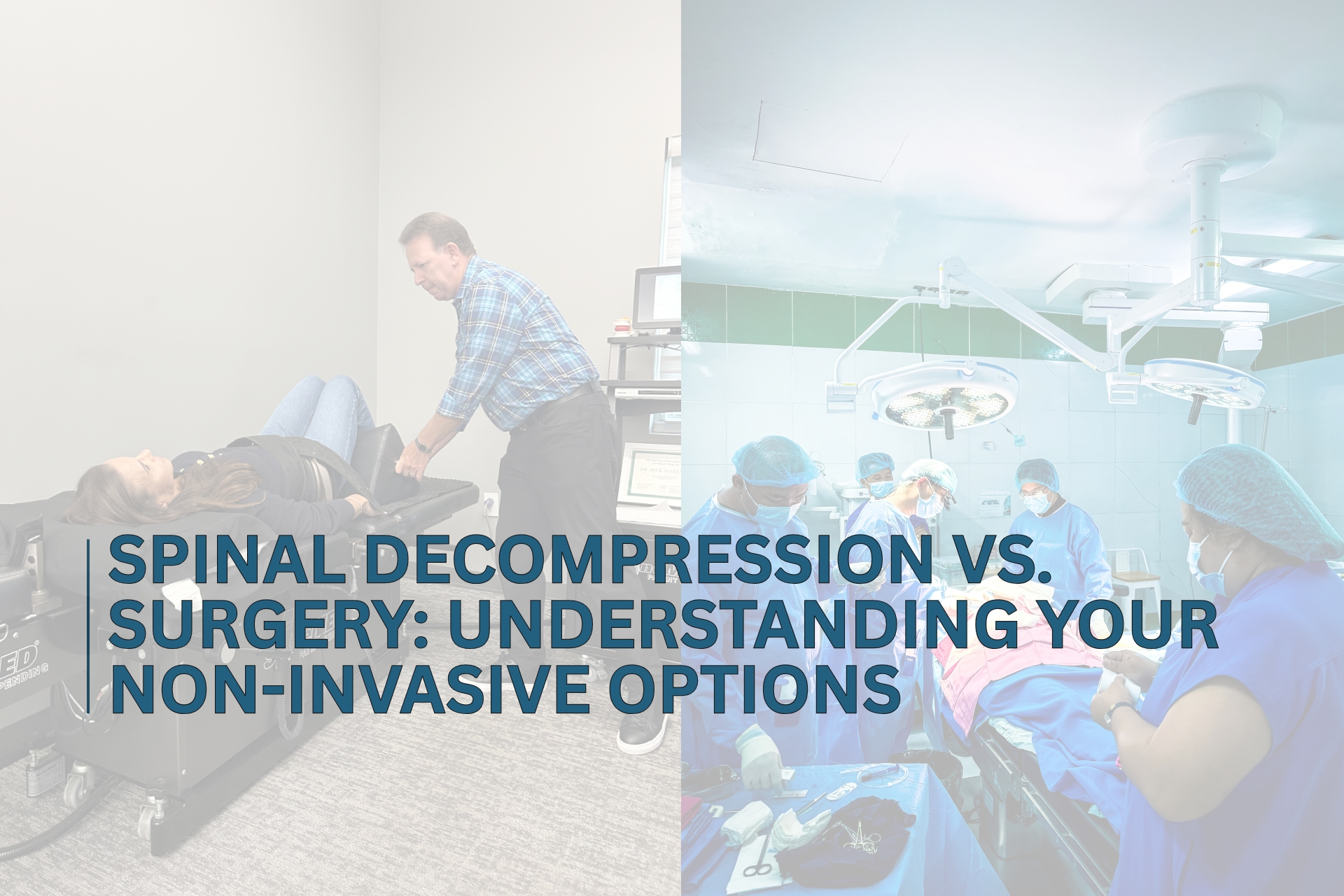
Spinal Decompression vs Surgery – Key Differences
Spinal decompression is a non-surgical therapy. It uses mechanical traction to relieve pressure on spinal discs. Spinal surgery, in contrast, involves invasive procedures like cutting tissue, removing bone, or inserting implants.
Key Distinctions:
- Surgery uses anesthesia; decompression does not.
- Decompression has minimal downtime.
- Surgical risks include infection, blood clots, and nerve damage.
- Decompression usually involves multiple therapy sessions over several weeks.
You’ll now learn when surgery becomes necessary, especially in complex or high-risk spinal conditions.
When Is Surgery Necessary?
Surgery becomes necessary when non-invasive therapies fail or when severe spinal conditions require structural correction.
Conditions Requiring Surgery:
- Spinal Instability: Vertebrae shift excessively; often needs spinal fusion.
- Severe Trauma or Fractures: Broken vertebrae or spinal compression.
- Disc Herniations with Nerve Damage: May require laminectomy or discectomy.
- Spinal Tumors: Tumors that compress nerves or cause deformities.
- Degenerative Deformities: Such as scoliosis or kyphosis affecting balance.
In these cases, spinal implants or surgical correction may be the only solution. Disc removal, fusion hardware, and surgical rods stabilize the spine when therapy isn't enough.
You’ll now discover the compelling advantages of decompression therapy for less severe conditions.
Benefits of Choosing Spinal Decompression Over Surgery
Spinal decompression offers a safer, faster, and more affordable option for many people with chronic back or neck pain.
Key Advantages:
- Non-Invasive: No incisions, no anesthesia, no hospital stay.
- Shorter Recovery Time: Most return to normal activity within days.
- Lower Cost: Usually under $5,000 for complete treatment.
- Fewer Risks: Minimal side effects like temporary stiffness or soreness.
- Outpatient-Based: Done in clinics with no downtime.
- Insurance-Friendly: Covered by many plans as conservative care.
Chiropractic decompression tables and traction therapy machines help relieve pressure on discs and nerves. This therapy is often used for:
- Herniated or bulging discs
- Sciatica
- Chronic lower back pain
- Degenerative disc disease
When surgery feels extreme or unaffordable, decompression therapy offers a viable back surgery alternative.
In the next section, we’ll compare the risks and side effects of each treatment.
Risks and Side Effects: Decompression vs Surgery
Side Effects of Spinal Surgery:
- Infection at the incision site
- Nerve injury or paralysis (rare but severe)
- Blood clots
- Reaction to anesthesia
- Scar tissue formation
- Long-term stiffness or weakness
- Long recovery period
Up to 20% of spinal surgeries require follow-up operations due to complications or incomplete relief (source: NCBI clinical data).
Side Effects of Spinal Decompression:
- Mild soreness after sessions
- Temporary back stiffness
- Rare dizziness
- No surgical site care needed
Decompression therapy has minimal risk and no need for wound care. It avoids the surgical dangers associated with anesthesia, blood loss, and infection.
Next, we’ll help you decide which option suits your condition best.
Choosing Between Spinal Decompression and Surgery
How to Decide:
- Mild to moderate pain without instability? Try non-surgical therapy first.
- Neurological symptoms, fractures, or severe deformities? Surgery may be needed.
- Failed decompression after 6–8 weeks? Consider surgical consultation.
Steps to Make the Right Choice:
- Get MRI or CT Scan: Understand the exact issue.
- Consult a Specialist: See a chiropractor, orthopedic surgeon, or neurosurgeon.
- Evaluate Goals: Want faster recovery? Prioritize non-invasive methods.
- Understand Severity: Severe compression or disc damage may need surgery.
- Weigh Risks vs Benefits: Surgery has higher risks but can solve complex issues.
Treatment response should guide your decision. Some patients start with decompression, then transition to surgery if pain persists.
Now we’ll answer some frequently asked questions from patients choosing between spinal decompression and surgery.
FAQs About Spinal Decompression vs Surgery
Is spinal decompression effective for herniated discs?
Yes. Non-surgical decompression therapy can reduce disc pressure and relieve pain for many herniated disc patients. However, severe or calcified herniations may require surgery.
Can I try therapy before surgery?
Yes. In fact, most insurance plans require conservative therapy first. It's also a good way to see if non-invasive treatment works before committing to surgery.
What is the success rate of spinal decompression?
Clinical studies report success rates between 68–85% for spinal decompression in reducing pain and improving mobility in mild to moderate cases.
Can surgery fix what decompression can’t?
Yes. Surgery addresses structural issues that therapy can’t fix, like spinal instability, bone spurs, or nerve compression from tumors or fractures.
Can I combine decompression and surgery?
Yes. Some patients use physical therapy or decompression to recover faster after surgery or to manage pain before surgery is scheduled.
Final Thoughts: Choosing What’s Right for Your Spine
Spinal decompression is a practical, low-risk treatment for many forms of back pain. It’s ideal for patients seeking no-surgery spine treatment. However, for conditions like spinal instability, fractures, or nerve compression, surgery offers structural solutions that therapy cannot.
Always work with a qualified spine specialist. Use MRI data, clinical exams, and treatment outcomes to guide your decision. When in doubt, start with non-invasive therapy before considering operative intervention.
Struggling with Back Chronic Pain in South Florida?
Discover how Spinal Decompression Therapy can offer lasting relief from disc-related back and neck pain—completely drug-free and non-invasive.
We Offer:
🔹Advanced Spinal Decompression Therapy — A proven, FDA-cleared solution to relieve pressure from herniated discs, sciatica, bulging discs, and degenerative disc disease. Backed by clinical studies with long-term success in reducing pain and restoring function.
🔹Tailored Treatment Plans — Every session is customized to your condition, guided by experienced spinal care professionals committed to measurable improvement.
🔹Compassionate, Supportive Team — At every stage of your journey, we put your comfort and recuperation first.
🔹Expert Leadership — Our care is led by renowned specialists in non-surgical spinal care and rehabilitation.
Learn More:
📘 What is Spinal Decompression Therapy?
📘 What to Expect During Your First Session
📘 Non-Surgical Relief for Herniated Discs—Real Success Stories
📘 Which Conditions Benefit from Spinal Decompression?
Visit Us:
📍 Conveniently located at 100 NW 100th Ave, Plantation, serving Palm Beach, Fort Lauderdale, and Miami.
💬 Over 1,000+ sessions successfully completed with a patient-first philosophy.
🏥 Trusted by chiropractic and pain management professionals throughout South Florida.
Take the First Step Toward a Pain-Free Life
Contact Spinal Decompression Therapy Institute today or call us at +1 954-472-7975.
No medications. No surgery. Just results.
👉 Follow us for patient stories, expert advice, and daily updates:
.png)
.png)
.png)
.png)
.webp)
.webp)
.webp)