




Conditions We Treat That May Benefit From Spinal Decompression Therapy
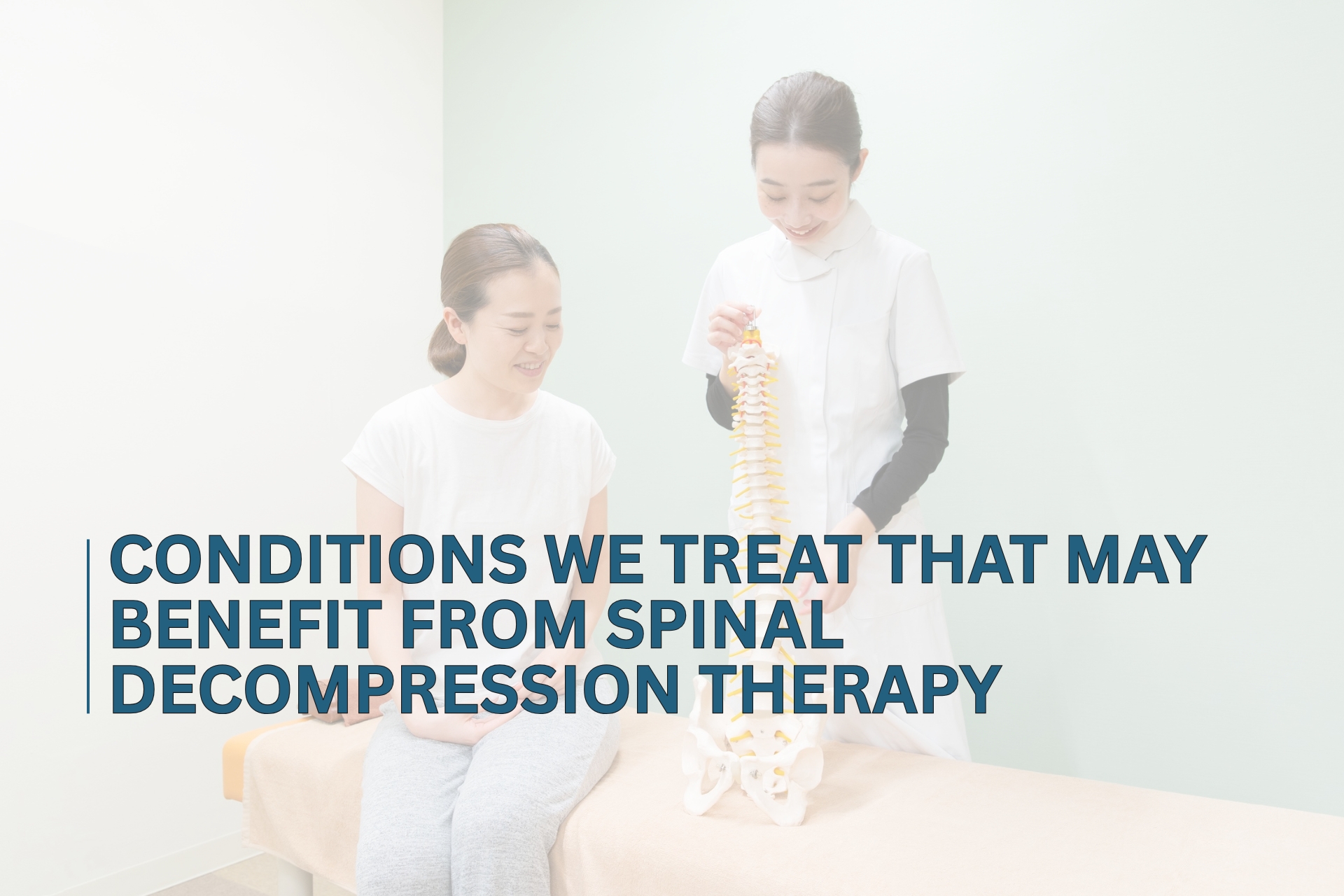
Spinal decompression therapy is a non-surgical treatment designed to relieve pressure on spinal discs and nerves. It works by gently stretching the spine using a motorized traction table or a similar traction-based therapy device.
When Is Spinal Decompression Used?
This therapy is used when spinal discs become compressed, bulge, or herniate, often causing pain, numbness, or tingling. It targets both acute injuries and chronic conditions that impact the spinal structure.
How Does Therapy Work?
- A therapy session usually involves lying on a traction table while a machine applies controlled tension to the spine.
- This tension creates negative intradiscal pressure, which encourages bulging or herniated discs to retract.
- It also improves blood flow and nutrient exchange within the spinal discs.
Patients often seek this treatment as a conservative option before considering surgery or when surgery has failed to bring relief.
You’ll see in the next sections how spinal decompression helps with various spine-related conditions.
Can Herniated or Bulging Discs Be Treated With Spinal Decompression?
Yes. Spinal decompression is especially effective for treating herniated and bulging discs.
What Happens When a Disc Herniates?
A disc herniates when the inner gel-like nucleus pulposus pushes through the outer annulus fibrosus. This pressure can compress nearby nerves, causing pain, numbness, or weakness. A bulging disc is a similar but milder form of displacement.
How Spinal Decompression Helps
- It reduces disc pressure, allowing the herniation to retract.
- It increases intervertebral disc space, which reduces nerve compression.
- It improves nutrient delivery to the injured disc.
Targeted Areas:
- Lumbar discs: Often cause lower back pain and sciatica.
- Cervical discs: Linked to neck pain and arm symptoms.
Examples:
✓ A 2022 study in Journal of Physical Therapy Science showed significant pain reduction in patients with lumbar disc herniation after 6 weeks of spinal decompression therapy.
✓ Patients with a disc bulge often report improved range of motion and nerve pain relief after multiple sessions.
Up next: How degenerative disc disease responds to decompression therapy.
Is Spinal Decompression Effective for Degenerative Disc Disease (DDD)?
Yes. Spinal decompression is commonly used to manage age-related disc degeneration.
What Is Degenerative Disc Disease?
DDD occurs when spinal discs lose hydration and elasticity. This leads to disc thinning, spinal wear, and sometimes facet joint pain. The condition may cause stiffness, chronic back pain, and reduced mobility.
Benefits of Decompression for DDD
- Restores disc height, which reduces joint stress.
- Promotes disc rehydration by improving nutrient transport.
- Reduces inflammation and spinal nerve irritation.
Statistics:
✓ DDD affects over 40% of adults over age 40 (NIH, 2020).
✓ Studies show consistent pain reduction after decompression in DDD cases, especially in the lumbar spine.
Spinal decompression offers a non-invasive alternative to manage DDD without medication or surgery.
The next section covers sciatica and nerve compression-related pain relief.
Does Spinal Decompression Help With Sciatica and Nerve Compression?
Yes. Spinal decompression therapy is a proven method to relieve nerve compression and sciatic pain.
What Is Sciatica?
Sciatica refers to radiating leg pain caused by compression of the sciatic nerve, typically from a herniated disc or bone spur. Symptoms include:
- Shooting pain down the leg
- Numbness or tingling
- Muscle weakness
- Worsening pain while sitting
How Decompression Works for Nerve Pain
- Reduces nerve root compression
- Alleviates inflammation around the spinal nerve
- Improves spinal alignment to ease tension
Key Benefits:
- Patients with pinched nerves often see relief within a few sessions.
- Decompression decreases nerve entrapment, especially in the lower spine.
Real-world impact: Many sciatica sufferers use spinal decompression to regain mobility and pain-free movement without invasive procedures.
Next: Find out how decompression helps in spinal stenosis cases.
Can Spinal Decompression Help With Spinal Stenosis?
Yes. Spinal decompression can ease the symptoms of spinal stenosis, a condition caused by narrowing of the spinal canal.
What Is Spinal Stenosis?
This condition reduces space in the spinal canal, putting pressure on the spinal cord and nerves. It often occurs in the cervical or lumbar regions.
Symptoms Include:
- Lower back pain
- Pain during walking
- Posture-related discomfort
- Tingling or numbness in legs or arms
Decompression Benefits for Stenosis:
- Creates space within the spinal canal
- Reduces pressure on nerves
- Improves postural alignment and mobility
Clinical Insight: Patients with lumbar stenosis often avoid surgery by opting for traction-based therapy that gradually reduces compression.
This is especially beneficial for those with mobility issues or poor surgical candidates.
The next section explores how spinal decompression can help when back surgery fails.
What If Back Surgery Failed? Can Decompression Still Help?
Yes. Spinal decompression is often used to treat post-surgical pain and Failed Back Surgery Syndrome (FBSS).
What Is FBSS?
FBSS refers to persistent pain following spine surgery, such as:
- Spinal fusion
- Discectomy
- Surgeries with nerve adhesions or scar tissue formation
How Decompression Helps After Surgery
- Alleviates nerve irritation caused by scar tissue
- Reduces pain without requiring additional surgery
- Improves function in patients with limited surgical success
Evidence: According to Pain Physician Journal, over 30% of back surgeries result in recurring or unrelieved pain. Many of these patients benefit from non-surgical decompression.
Post-surgical decompression is often safer and avoids the risks of revision surgeries.
Next: Discover common questions patients ask about spinal decompression therapy.
FAQs: Which Conditions Respond to Spinal Decompression?
Can Arthritis Be Treated With Spinal Decompression?
Spinal decompression is not a cure for arthritis, but it can relieve inflammation-based back pain linked to spinal joint degeneration. It’s often used alongside physical therapy or medication for arthritis-related conditions.
Is Decompression Therapy Good for Scoliosis?
Decompression can relieve nerve compression caused by scoliosis. It doesn’t reverse spinal curvature but may reduce posture pain and improve flexibility in mild to moderate cases.
Can Muscle Spasms Be Treated With Decompression?
Muscle spasms may improve if they’re caused by nerve impingement or disc compression. Decompression relieves the root cause but should be combined with muscle therapy for lasting results.
Is Decompression Good for Poor Posture?
Yes. Spinal decompression can reduce posture-related discomfort, especially when poor alignment causes disc compression or spinal inflammation.
What Conditions Are Most Suitable?
Spinal decompression therapy is most effective for:
Herniated discs, Bulging discs, Degenerative disc disease, Sciatica, Spinal stenosis, FBSS or post-surgical pain, Chronic nerve compression
It may also support recovery in posture disorders and certain curvature conditions.
Struggling with Back Chronic Pain in South Florida?
Discover how Spinal Decompression Therapy can offer lasting relief from disc-related back and neck pain—completely drug-free and non-invasive.
We Offer:
🔹Advanced Spinal Decompression Therapy — A proven, FDA-cleared solution to relieve pressure from herniated discs, sciatica, bulging discs, and degenerative disc disease. Backed by clinical studies with long-term success in reducing pain and restoring function.
🔹Tailored Treatment Plans — Every session is customized to your condition, guided by experienced spinal care professionals committed to measurable improvement.
🔹Compassionate, Supportive Team — At every stage of your journey, we put your comfort and recuperation first.
🔹Expert Leadership — Our care is led by renowned specialists in non-surgical spinal care and rehabilitation.
Learn More:
📘 What is Spinal Decompression Therapy?
📘 What to Expect During Your First Session
📘 Non-Surgical Relief for Herniated Discs—Real Success Stories
📘 Which Conditions Benefit from Spinal Decompression?
Visit Us:
📍 Conveniently located at 100 NW 100th Ave, Plantation, serving Palm Beach, Fort Lauderdale, and Miami.
💬 Over 1,000+ sessions successfully completed with a patient-first philosophy.
🏥 Trusted by chiropractic and pain management professionals throughout South Florida.
Take the First Step Toward a Pain-Free Life
Contact Spinal Decompression Therapy Institute today or call us at +1 954-472-7975.
No medications. No surgery. Just results.
👉 Follow us for patient stories, expert advice, and daily updates:
.png)
.png)
.png)
.png)
.webp)
.webp)
.webp)