




A patient-friendly look at decompression care for spinal stenosis

Spinal decompression therapy may help relieve symptoms of spinal stenosis by reducing pressure on compressed nerves in the spine. The treatment gently stretches the spine to create space between vertebrae and support disc recovery.
At Disc Therapy Institute, providers use advanced decompression technology to address disc pressure, nerve compression, and chronic back pain without surgery.
What Is Spinal Stenosis?
Spinal stenosis occurs when the spinal canal narrows and compresses nearby nerves. The condition most commonly affects the lumbar spine (lower back).
Nerve compression can cause pain, numbness, and difficulty walking. Spinal stenosis often develops gradually as the spine ages and structural changes occur.
What Causes Spinal Stenosis?
Spinal stenosis develops when structures inside the spine reduce the available space for nerves.
Common causes include:
- Degenerative disc disease which, reduces disc height
- Bone spurs that form around arthritic spinal joints
- Herniated or bulging discs that press on nerves
- Thickened spinal ligaments that narrow the canal
- Facet joint arthritis that enlarges spinal joints
According to research published in Journal of Neurosurgery: Spine, age-related degeneration is the most common cause of lumbar spinal stenosis.
What Symptoms Does Spinal Stenosis Cause?
Symptoms occur when narrowing of the spinal canal compresses nerve roots.
Common spinal stenosis symptoms include:
- lower back pain
- pain radiating into the legs
- numbness or tingling in the legs or feet
- weakness in the legs
- difficulty walking long distances
Many patients experience neurogenic claudication, a condition where leg pain worsens during walking and improves when sitting or bending forward.
Next, it helps to understand how decompression therapy targets nerve pressure.
How Does Spinal Decompression Therapy Work?
At Disc Therapy Institute in Plantation, FL, spinal decompression therapy uses a specialized decompression table to gently stretch the spine. This process lowers pressure inside spinal discs and creates space for compressed nerves.
During treatment, a specialized decompression table performs cycles of stretching and relaxation.
This process may help:
- reduce disc bulging
- improve disc hydration
- decrease nerve compression
- support natural healing of spinal tissues
A clinical study published in Pain Research and Management (2018) reported improvements in pain and mobility in patients receiving spinal decompression therapy for lumbar disc conditions.
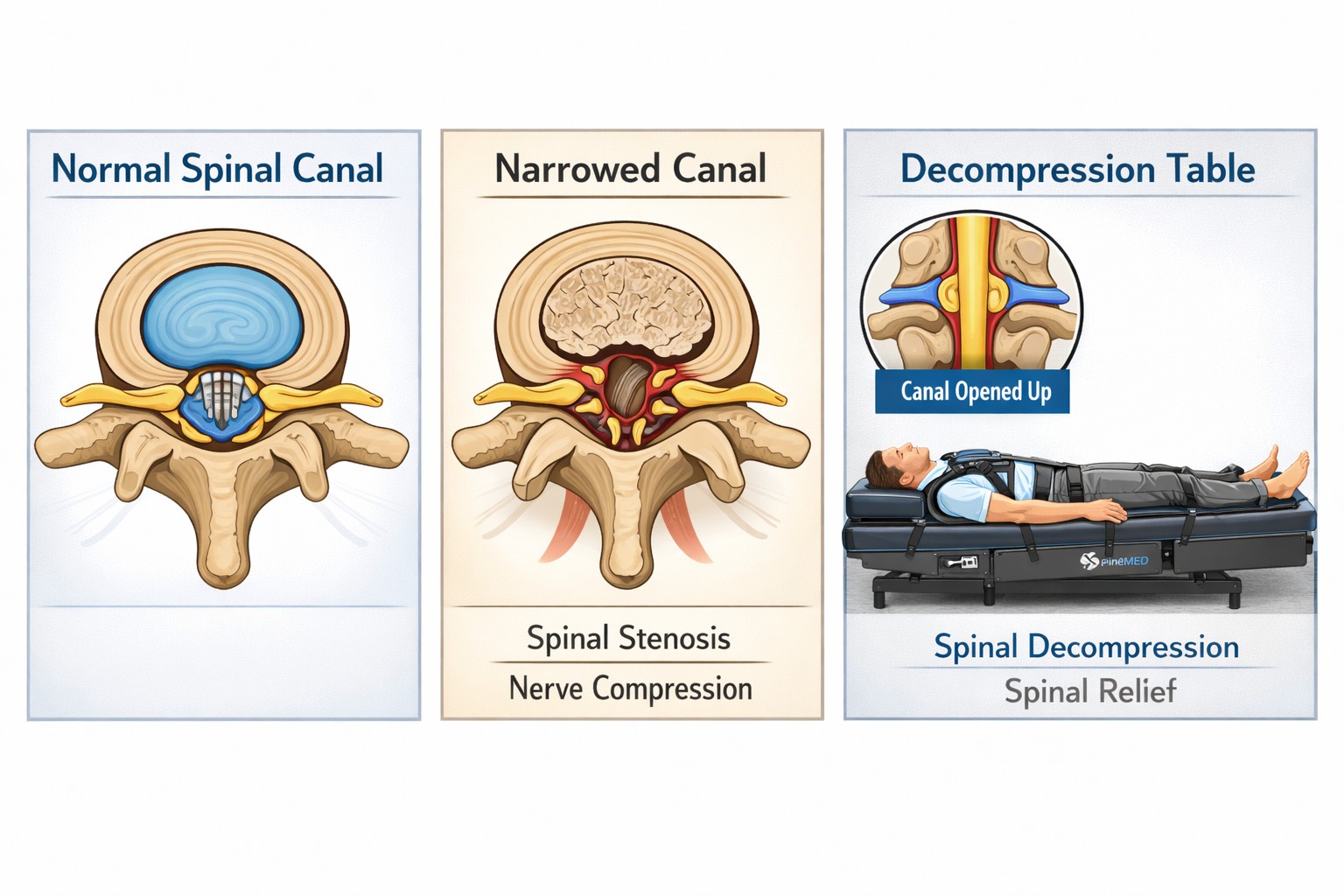
Illustration comparing normal spinal canal, spinal stenosis nerve compression, and spinal decompression traction therapy.
What Benefits May Spinal Decompression Provide?
Non-surgical spinal decompression focuses on relieving mechanical pressure in the spine.
Patients receiving decompression therapy may experience:
- reduced nerve compression
- decreased lower back pain
- improved spinal mobility
- improved disc hydration
- better tolerance for walking or standing
Every patient responds differently, and outcomes depend on factors such as age, severity of degeneration, and overall spinal health.
Who Is a Good Candidate for Spinal Decompression?
Patients with certain spinal conditions may benefit from decompression therapy.
Typical candidates include individuals with:
- mild to moderate spinal stenosis
- herniated or bulging discs
- degenerative disc disease
- chronic lower back pain
- nerve compression causing leg symptoms
A detailed consultation and review of imaging studies helps determine whether decompression therapy is appropriate.
When Is Spinal Decompression Not Recommended?
Some medical conditions prevent safe use of spinal decompression therapy.
Providers may avoid decompression therapy if a patient has:
- spinal fractures
- severe osteoporosis
- spinal tumors
- advanced spinal instability
- recent spinal surgery
A proper evaluation helps identify safe treatment options.
What Happens During a Spinal Decompression Session?
A spinal decompression session typically lasts 20–30 minutes.
During treatment:
- The provider reviews symptoms and treatment goals.
- The patient lies comfortably on a decompression table.
- A harness system gently applies traction to the spine.
- The system performs controlled stretch and relaxation cycles.
Many treatment programs include multiple sessions over several weeks, often combined with strengthening exercises and posture correction.
Spinal Decompression vs Spinal Surgery
Many patients explore decompression therapy when looking for alternatives to surgery.
Key differences include:
Spinal Decompression Therapy
- non-invasive
- no anesthesia required
- minimal recovery time
- performed in outpatient clinics
Spinal Surgery
- invasive procedure
- requires anesthesia
- recovery may take weeks or months
- performed in hospital settings
A physician evaluates symptom severity and imaging results before recommending surgery.
Patient Experience
"After struggling with leg pain for years, spinal decompression therapy helped me walk comfortably again. The team explained every step of treatment."
— Disc Therapy Institute Patient
Frequently Asked Questions About Spinal Decompression
Is spinal decompression therapy safe?
Spinal decompression therapy is generally considered safe when trained providers perform proper screening and follow established treatment protocols.
How many decompression sessions are needed?
Many treatment programs include 20–28 sessions over six to eight weeks, although treatment length varies depending on the patient’s condition.
Does insurance cover spinal decompression therapy?
Insurance coverage varies between plans. Some components of care may be covered, while other services may require self-pay options.
How long do results last?
Results vary. Many patients maintain improvements by following exercise programs, maintaining healthy posture, and reducing excessive spinal strain.
Can spinal stenosis heal without surgery?
Many patients manage spinal stenosis without surgery using conservative treatments such as spinal decompression therapy, physical therapy, posture correction, and strengthening exercises. A provider evaluates severity before recommending treatment options.
Maintaining Long-Term Spinal Health
Protecting the spine after treatment helps reduce recurrence of symptoms.
Helpful strategies include:
- strengthening core muscles
- maintaining healthy body weight
- improving sitting posture
- using ergonomic workstations
- lifting objects with proper technique
These habits support spinal stability and reduce mechanical stress on discs and joints.
Medical Disclaimer:
This article provides educational information only and does not replace professional medical advice, diagnosis, or treatment.
Schedule a Spinal Stenosis Consultation
At the Disc Therapy Institute in Plantation, FL, providers use advanced decompression technology to address disc pressure, nerve compression, and chronic back pain without surgery.
During your consultation, providers evaluate:
- symptoms
- imaging results
- spinal mobility
- candidacy for decompression therapy
Schedule your spinal stenosis consultation today, if you are experiencing leg pain, numbness, or difficulty walking, a spinal evaluation can determine whether decompression therapy may help.
Call +1 (954) 472-7975 or schedule online: https://www.disctherapy.com/book-your-appointment-today
Appointments available at our Plantation, FL clinic.
.png)
.png)
.png)
.png)
.webp)
.webp)
.webp)