




Spinal decompression for spinal stenosis: what to know
Spinal stenosis causes nerve compression when the spinal canal narrows. The condition often produces lower back pain, leg numbness, and difficulty walking. Many patients search for treatment options that do not involve surgery.
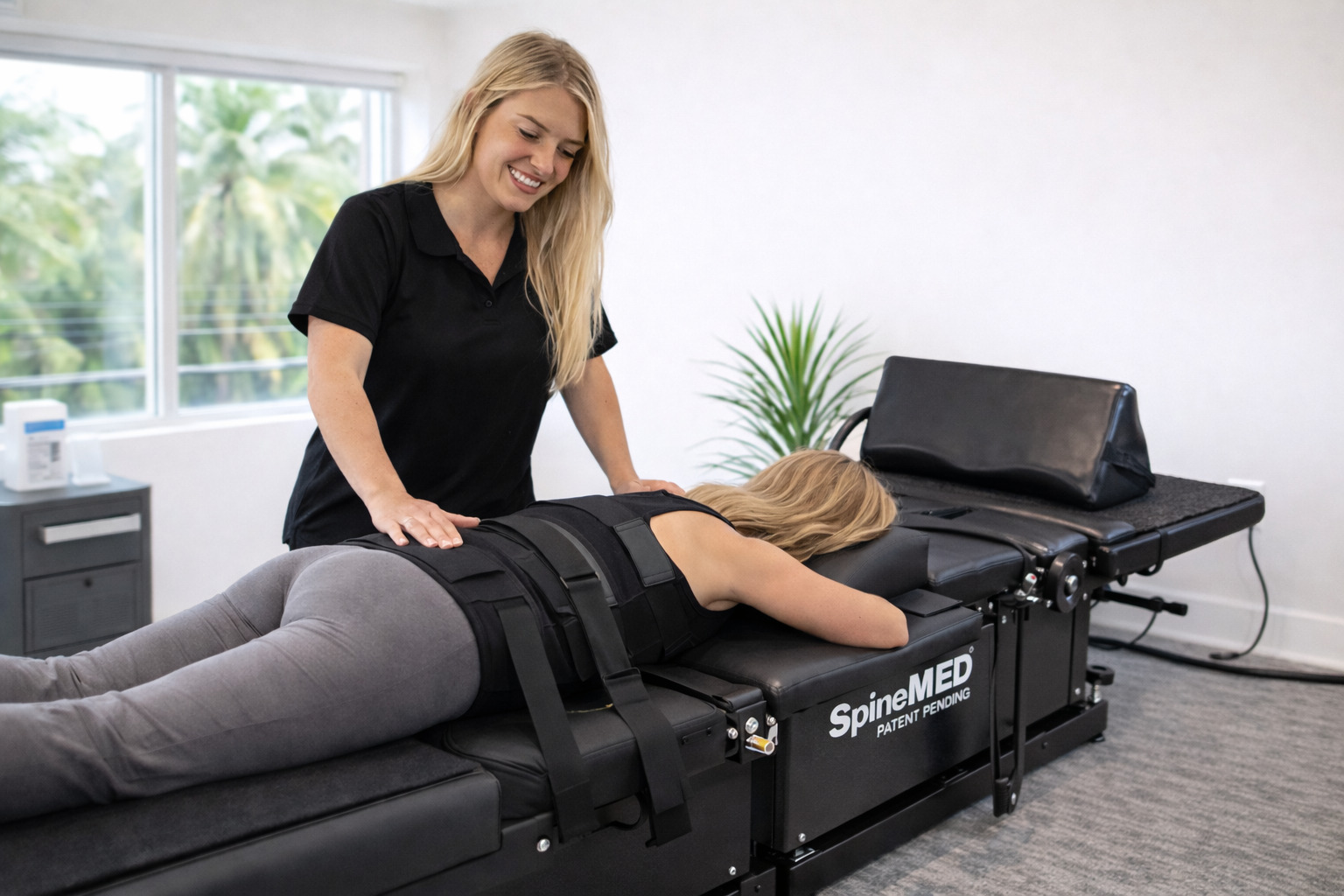
Non-surgical spinal decompression therapy aims to reduce pressure on compressed spinal discs and nerves. Clinics use specialized traction technology to gently stretch the spine and improve disc space.
This guide explains spinal stenosis symptoms, causes, diagnosis, and how non-surgical spinal decompression therapy may help certain patients.
What Is Spinal Stenosis?
Spinal stenosis occurs when the spinal canal narrows and compresses nearby nerves. The narrowing most commonly develops in the lumbar spine or cervical spine.
- Degenerative changes usually cause this narrowing. Age-related disc degeneration, arthritis, and bone spur formation gradually reduce space for spinal nerves.
- Doctors commonly diagnose two main forms of spinal stenosis.
- Lumbar spinal stenosis affects the lower back and frequently causes leg pain while walking.
- Cervical spinal stenosis affects the neck and may cause numbness, weakness, or coordination problems in the arms or hands.
Many patients notice symptom relief when sitting or bending forward because these positions temporarily increase space around the spinal nerves.
What Causes Spinal Stenosis?
Spinal stenosis most often develops due to structural changes in the spine that occur with aging.
Several conditions contribute to narrowing of the spinal canal.
Common causes include:
- Degenerative arthritis.
Facet joint arthritis produces inflammation and bone spur formation. - Bulging or herniated discs.
Disc material may extend into the spinal canal and compress nerves. - Thickened spinal ligaments.
Ligamentum flavum thickening reduces available nerve space. - Bone spurs.
Osteophytes may develop along the vertebrae and narrow the canal. - Congenital spinal canal narrowing.
Some individuals are born with a smaller spinal canal.
According to the North American Spine Society, lumbar spinal stenosis represents one of the most common reasons adults over age 65 undergo spinal surgery.
Understanding the cause of stenosis helps physicians determine the most appropriate treatment approach.
What Are the Common Symptoms of Spinal Stenosis?
Spinal stenosis produces symptoms when nerve compression affects the spinal cord or spinal nerve roots.
Symptoms usually develop gradually.
Common symptoms include:
- Persistent lower back pain
- Leg numbness or tingling
- Weakness in the legs
- Burning pain that travels down the leg
- Pain that worsens while walking
- Difficulty standing for long periods
- Relief when sitting or leaning forward
Doctors often refer to the walking-related leg pain as neurogenic claudication.
This symptom occurs because compressed spinal nerves struggle to function during prolonged standing or walking.
Patients experiencing persistent neurological symptoms should seek medical evaluation to determine the underlying cause.
How Doctors Diagnose Spinal Stenosis
Healthcare providers diagnose spinal stenosis using clinical evaluation and imaging studies.
The diagnostic process usually begins with a medical history and physical examination. Physicians evaluate nerve function, mobility, and pain patterns.
Imaging tests help confirm the diagnosis.
Common diagnostic tools include:
- MRI scans that visualize discs, nerves, and soft tissues
- CT scans that provide detailed images of spinal structures
- X-rays that identify bone degeneration and alignment
- MRI imaging often provides the clearest view of spinal nerve compression.
Accurate diagnosis allows doctors to determine whether conservative treatment or surgical intervention may be appropriate.
Non-Surgical Treatment Options for Spinal Stenosis
Many patients manage spinal stenosis without surgery. Conservative treatment often focuses on reducing inflammation, improving mobility, and relieving nerve compression.
Common non-surgical approaches include:
- Physical therapy that strengthens spinal support muscles
- Anti-inflammatory medications prescribed by physicians
- Epidural steroid injections that reduce nerve inflammation
- Activity modification and posture training
Spinal decompression therapy designed to relieve disc pressure on spinal nerves. These treatments may reduce symptoms and improve mobility for many patients.
Treatment plans vary depending on the severity of nerve compression and overall spinal health.
What Is Non-Surgical Spinal Decompression Therapy?
Non-surgical spinal decompression therapy is commonly used to treat disc conditions such as herniated discs and sciatica.
Specialized decompression tables apply targeted pulling forces that create negative pressure within spinal discs. This pressure change may help reduce disc bulging and relieve nerve compression.
The therapy aims to accomplish several goals.
- Increase space between vertebrae
- Reduce pressure on spinal nerves
- Improve fluid movement within spinal discs
- Support the natural healing environment of spinal tissues
Patients typically receive a series of treatment sessions lasting several weeks.
Research published in spine-related clinical journals suggests traction-based therapies may help reduce disc pressure in certain spinal conditions. Results vary depending on the severity of the condition and patient characteristics.
Who May Benefit From Spinal Decompression Therapy?
Spinal decompression therapy may help patients experiencing chronic disc-related spinal pain.
Common candidates include individuals with:
- Lumbar disc bulges
- Herniated discs
- Degenerative disc disease
- Sciatica caused by disc compression
- Certain cases of spinal stenosis involving disc pressure
Patients often pursue decompression therapy after conservative treatments provide limited relief.
A professional evaluation determines whether this therapy may be appropriate.
Who Is Not a Candidate for Spinal Decompression Therapy?
Some medical conditions prevent the safe use of spinal decompression therapy.
Patients may not qualify for treatment if they have:
- Spinal fractures
- Advanced osteoporosis
- Spinal tumors
- Metal implants in the spine
- Recent spinal fusion surgery
- Pregnancy
Healthcare providers review medical history and imaging results before recommending treatment.
Patient safety remains the highest priority when selecting any spinal therapy.
When Is Surgery Considered for Spinal Stenosis?
Doctors usually recommend surgery when severe nerve compression causes progressive neurological symptoms.
Surgical procedures aim to create additional space for spinal nerves.
Common procedures include laminectomy or spinal fusion.
Surgery may become necessary when patients experience:
- Severe weakness in the legs
- Loss of bowel or bladder control
- Progressive nerve damage
- Severe pain that does not respond to conservative treatment
However, many patients first explore non-surgical treatment options before considering surgery.
When Should You Seek Medical Evaluation?
Persistent back pain or neurological symptoms should never be ignored.
You should seek evaluation if you experience:
- Leg pain while walking
- Numbness in the feet or legs
- Weakness in the lower extremities
- Difficulty maintaining balance
- Chronic lower back pain that interferes with daily activity
Early evaluation allows healthcare professionals to identify spinal conditions before symptoms worsen.
Frequently Asked Questions About Spinal Stenosis
Can spinal stenosis improve without surgery?
Many patients manage symptoms using conservative treatments. Physical therapy, medication, and traction-based spinal decompression therapy may reduce nerve compression and improve mobility.
Is spinal stenosis a permanent condition?
Spinal stenosis often results from degenerative changes. Treatment focuses on symptom management and improving function rather than reversing structural aging changes.
Is walking safe with spinal stenosis?
Walking often supports spinal mobility and circulation. Many patients tolerate shorter walking sessions better than prolonged standing or extended walking distances.
Medical References
National Institute of Health. Spinal Stenosis Information Page.
North American Spine Society. Clinical Guidelines for Lumbar Spinal Stenosis.
Cleveland Clinic. Spinal Stenosis Overview.
Mayo Clinic. Spinal Stenosis Diagnosis and Treatment.
Medical Disclaimer
The information provided in this article is intended for educational purposes only. It does not replace professional medical evaluation, diagnosis, or treatment. Always consult a qualified healthcare provider regarding symptoms or medical conditions.
How Disc Therapy Institute Approaches Non-Surgical Spine Care
Disc Therapy Institute focuses on non-surgical spinal care designed to relieve pressure on spinal discs and nerves. We provide spinal decompression therapy for patients in Plantation, Davie, Sunrise, and surrounding Broward County communities.
Treatment plans often combine spinal decompression therapy with supportive therapies aimed at improving mobility and spinal stability.
A personalized evaluation allows clinicians to determine whether decompression therapy may help reduce disc pressure and improve function.
Contact Disc Therapy Institute in Plantation, FL or call (954) 472-7975 to schedule your spinal decompression consultation and learn whether non-surgical spinal decompression therapy may help relieve nerve pressure and improve mobility.
.png)
.png)
.png)
.png)
.webp)
.webp)
.webp)